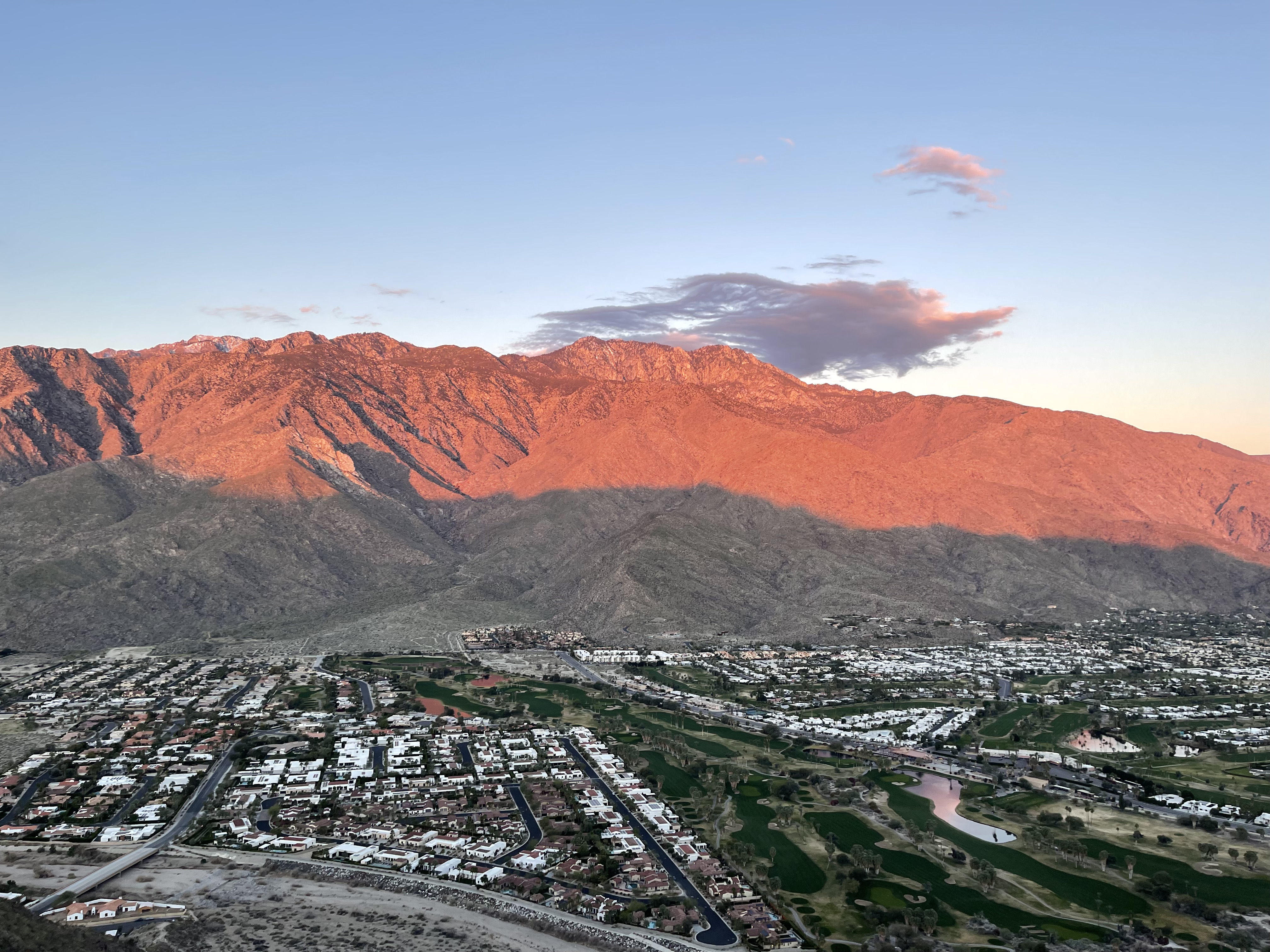
The headlines promised Greater Palm Springs a buyer’s market in the summer of 2026. It never arrived. Coachella Valley inventory this June fell to 2,965 units — down 10.5% year over year — while the median detached home held at $654,333, off just 5.2%. Locked-rate sellers refused to sell into a near-seven-percent market, supply contracted instead of building, and prices found a floor. Beneath the calm, the valley split in two: luxury holding its ground while the entry tier quietly gives way.
The market that was supposed to break
For most of the past year, the story wrote itself. Rates stuck near seven percent, affordability stretched to its limit, a wave of pent-up sellers finally giving up the wait — and the payoff, we were told, would be a buyer’s market. Leverage would swing. Prices would soften. The desert would finally cool.
It didn’t happen. Not because demand roared back, but because the sellers refused to play the part written for them. Look at what actually moved. This June, total inventory across the Coachella Valley stood at 2,965 units — down 10.5% from a year ago. Read that twice. In the middle of a supposed buyer’s market, supply didn’t build. It contracted.
That is the whole story of the desert in 2026, and almost no one is telling it correctly.
The bluff, called
Here is the mechanics the headlines missed. A buyer’s market needs two things: buyers with leverage, and sellers who have to sell. The first arrived. The second never did.
Most Coachella Valley owners are sitting on mortgages written in a different era — locked at rates they will never see again. To sell into this market and buy back into it is to trade a three-handle rate for a near-seven. So when buyers pulled back and waited for the discount, sellers simply… didn’t blink. They pulled listings. They held. The standoff didn’t crater prices — it removed the very inventory that a buyer’s market runs on.
The buyers bet the sellers would fold. The sellers called it.
Prices held because the supply that would have broken them never reached the market.
Why the floor is real, not lucky
It would be easy to dismiss this as a temporary standoff. The macro backdrop says otherwise. Nationally, rates remain parked near 6.6% and inflation has climbed back toward 4.2% — the cost of borrowing isn’t easing meaningfully, and buyers know it.
But something shifted in the psychology. For the first time since 2023, more Americans say it’s better to buy than to rent — 53%, up from 48% a year ago. The waiting game has a cost, and buyers have started to price it in.
They’ve stopped holding out for a 3% mortgage that isn’t coming back.
That’s the quiet engine under the desert floor. Sellers won’t give away a locked rate. Buyers have stopped waiting for a miracle. The result isn’t a boom — it’s a stalemate that reads, on the chart, as stability. A market clearing at a new, higher, durable normal.
One valley, two floors
But “stable” hides as much as it reveals — and this is where the desert tells on itself. Zoom in on the June numbers and the single valley splits into two. At the top, the floor doesn’t just hold — it rises. At the entry tier, the ground gives.
These are the neighborhoods where buyers actually do have leverage — because these are the sellers who don’t hold a golden rate and can’t afford to wait. This is the K-shaped economy, rendered in one valley’s zip codes. Last year the story was luxury surging while the middle stood still. This year it’s luxury holding the floor while the entry tier quietly gives ground. The gap didn’t close. It just changed which end is doing the work.
What this means, if you're the one deciding
“The valley is down 5%” is true — and nearly useless.
Strip away the noise and the desert in 2026 offers a clearer read than the headlines allow. If you’re selling at the top of the market, you hold the cards you always held — inventory is scarce, dollar volume is still climbing, and the buyer for a well-positioned luxury home is still there and still moving.
If you’re selling at the entry tier, price to the market as it is, not as it was — the leverage has genuinely shifted, and pretending otherwise costs you weeks. And if you’re buying, the discount you were promised exists — but only in specific pockets, and only if you know exactly where the floor is soft and where it’s solid.
That’s the part no market-wide statistic can tell you. What matters is which valley, which street, which side of the K you’re standing on. That read doesn’t come from a portal. It comes from someone who works this ground every day. That’s the work I do.
The quarterly read on where the Greater Palm Springs market is actually moving.
Four times a year, a working Broker’s read on the future of this business, written for the people living it. No hype. Straight to your inbox.